Tent Packed Size vs. Interior Space: What to Compare
- Format
- Comparison
- Reading time
- 7 min
- Updated
- November 17, 2026
Compare floor area, peak height, wall angle and vestibule area, not the "person" rating. For car camping, a bigger packed size is usually worth it for steeper walls and more floor; for backpacking, the trade goes the other way.
Written for: Beginners choosing a first tent for car camping with a partner or family
Two tents with the same "4-person" label can feel completely different inside. One lets you sit up and change clothes. The other makes you crawl. The specs tell you which is which, if you know where to look.
The "person" rating
There is no single industry rule for person ratings. In general, the number means how many standard sleeping pads fit on the floor side by side, with little room left over. It does not include room for bags, shoes, a dog or a child who moves in the night.
Floor area and floor shape
Floor area is listed in square feet. It is the most direct measure of usable space. Also look at the floor dimensions. A tapered floor that narrows at the foot end lists a decent area but fits fewer pads side by side than a rectangle of the same area.
Peak height and wall angle
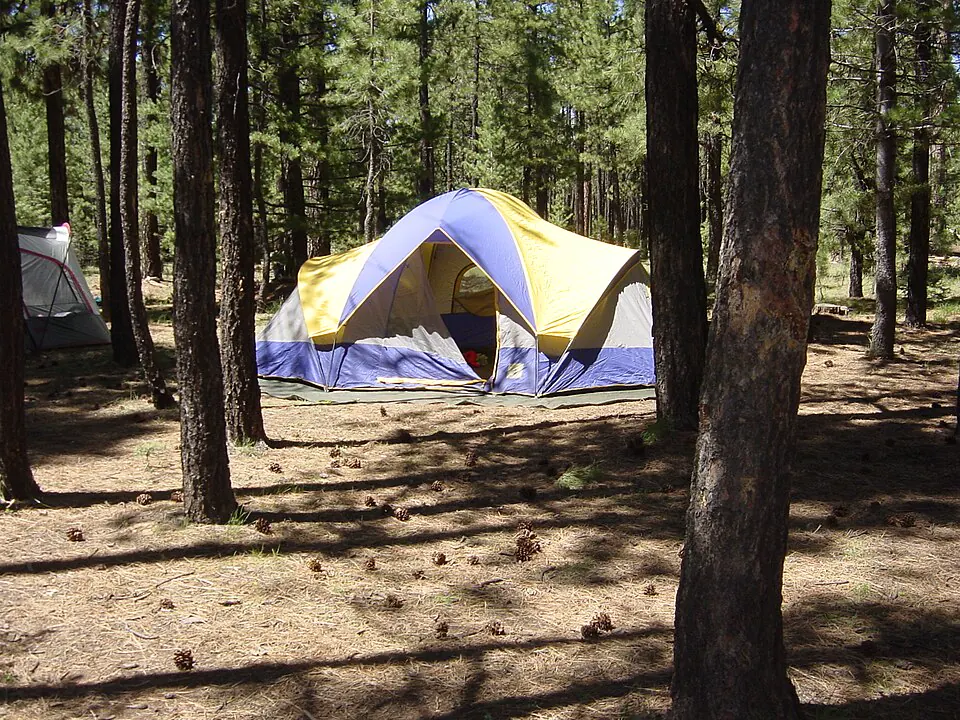
Peak height is the tallest point inside, usually at the center. It tells you if you can sit up or stand. What it does not tell you is how quickly the roof drops away. Dome tents have walls that slope in, so the headroom near the walls is low. Cabin-style tents have walls that are close to vertical, so more of the floor has useful height.
Pole design is what makes walls steeper. Extra crossing poles or a short "brow" pole at the top pull the walls outward. More poles usually mean a bigger packed size and a little more setup time.
Vestibules and doors
A vestibule is the covered space between the tent door and the rainfly. It keeps boots and packs dry without bringing them into the sleeping area. Vestibule area is often listed separately from floor area. Two doors with two vestibules mean nobody climbs over anyone at night.
Comparison table
| Spec | Backpacking dome | Car camping dome | Cabin-style tent |
|---|---|---|---|
| Packed size | Small | Medium | Large |
| Weight | Light | Moderate | Heavy |
| Peak height | Sitting height | Sitting to stooped standing | Standing height for most adults |
| Wall angle | Sloped | Sloped, sometimes with a brow pole | Near vertical |
| Wind stability | Good when staked well | Good | Lower; needs guylines |
| Doors and vestibules | Often 1-2 small | Often 1-2 medium | Often 1-2, sometimes with an awning |
| Best for | Carrying on your back | Most weekend car trips | Families and long stays |
Packed size: when it matters
- Car camping: packed size matters only for trunk space. Lay out your other gear and see what fits.
- Walk-in sites: if you carry gear a few hundred feet from the car, a carry bag with backpack straps helps more than a smaller tent.
- Backpacking: weight and packed size come first, and you accept less space inside.
How to compare two tents on paper
- Count your pads Add up the width of the pads you will use. Compare it with the floor width, and leave a little extra so pads are not pushed up against sloped walls.
- Divide floor area by people This gives a rough sense of space per person. Compare tents with the same number of sleepers this way rather than by label.
- Check peak height against the tallest person If someone wants to stand to change clothes, look for a peak height above their height and walls that stay steep.
- Add the vestibules If you keep packs and shoes outside the sleeping area, vestibule area can make a smaller tent feel bigger.
- Check packed size last Once you have two or three tents that fit your group, choose the one that fits your car and your budget.
Weather protection
Check whether the rainfly reaches close to the ground on all sides. A short fly that only covers the roof lets wind-blown rain hit the mesh walls. Taller tents also catch more wind, so look at the number of guy-out points and stake loops.
Questions people ask
What size tent do two adults need?
A 2-person tent fits two pads. For car camping with gear inside and room to sit up, many couples choose a 3- or 4-person tent.
Is a cabin tent better than a dome?
Cabin tents give more standing room. Dome tents usually handle wind better and pack smaller. Choose based on where you camp and how much space you have in the car.
Does vestibule area count as floor area?
No. Floor area is the sleeping space inside the tent body. Vestibule area is listed separately and is for gear storage.
How do I check if a tent fits my car?
Compare the listed packed dimensions with your trunk, leaving space for the cooler and sleeping gear. Packed size is usually printed on the product page.
Sources
This guide is research-based: it draws on manuals, published specifications and safety guidance, not on hands-on testing. If we link to a retailer, we may earn a commission at no cost to you. Affiliate disclosure