How to Pitch a Tent at Your Campsite, Step by Step
- Format
- How-to
- Reading time
- 7 min
- Updated
- November 17, 2026
Choose a flat, cleared tent pad, lay a footprint slightly smaller than the tent floor, assemble the poles, raise the tent, add the rainfly and stake every corner and guyline at an angle. Practice once at home before the trip.
Written for: First-time campers setting up a freestanding dome tent at a drive-in campground
Most dome tents go up the same way. The steps below fit the common freestanding design, with two or three poles that cross over the top. If your tent is different, follow its instructions; most come with a diagram sewn into the bag or printed on a card.
Plan your arrival
Aim to reach the campsite with at least an hour or two of daylight left. Pitching a new tent by headlamp is slow and frustrating. Check in, find your site number, and walk around it before you unload anything. Note where the water tap, restrooms and trash bins are.
Choose the spot
- Use the campsite's tent pad if it has one. These are built to drain and protect plants around them.
- Look for flat ground. If there is a slight slope, put your head uphill.
- Avoid low spots where rain will collect.
- Look up. Do not pitch under dead branches or leaning trees.
- Keep the tent well away from the fire ring and the cooking area.
Pitching the tent
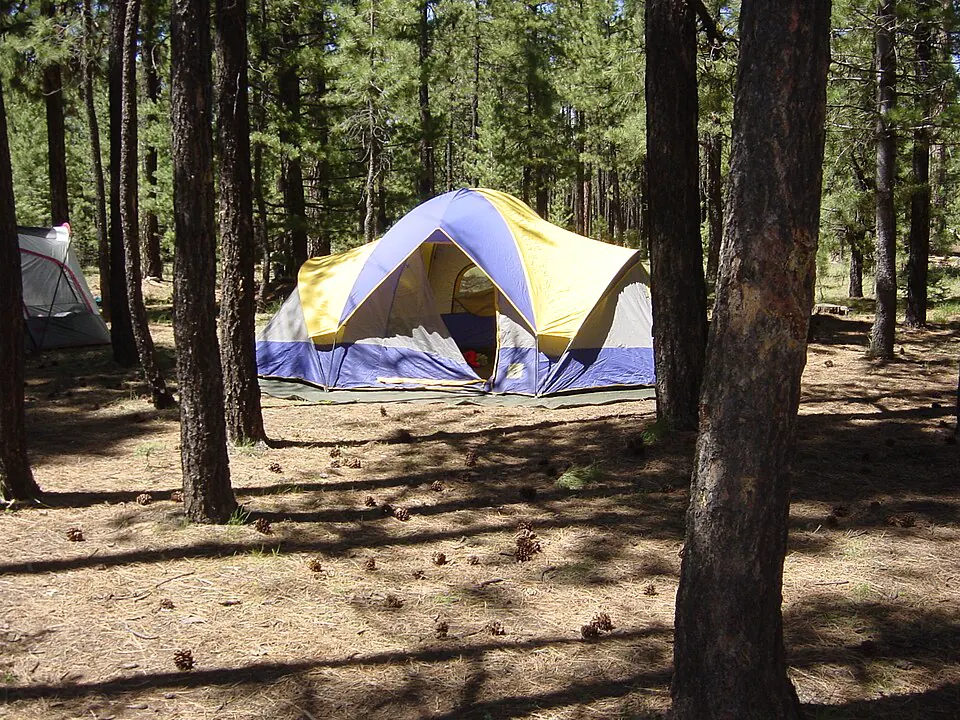
- Clear the ground Remove sticks, pine cones and sharp stones from the area. Small bumps feel big at night.
- Lay the footprint Spread the footprint or ground sheet where the tent will go. It should be slightly smaller than the tent floor so rain does not run onto it and pool underneath.
- Spread out the tent body Lay the tent on top with the floor down. Turn the door to face where you want it, often away from the wind.
- Assemble the poles Unfold each shock-corded pole and make sure every section is fully seated. A half-seated joint can crack under tension.
- Attach poles to the tent Slide poles through sleeves or clip them on, matching color codes if your tent has them. Seat the pole ends in the grommets or pins at each corner. The tent will rise as you go.
- Stake the corners Pull each corner out so the floor is taut and square. Push stakes in at about a 45-degree angle, with the top leaning away from the tent.
- Add the rainfly Line up the fly door with the tent door. Attach it at the corners and fasten any Velcro tabs under the fly to the poles.
- Stake the vestibules and guylines Pull vestibules out and stake them. Run guylines out in line with the seams and stake them so the fly is tight and does not touch the inner tent.
- Check and adjust Walk around the tent. Tighten straps so the fly is smooth, with a gap between the fly and the inner walls for airflow.
If the ground is hard or soft
| Ground | What usually helps |
|---|---|
| Hard or rocky | Use a mallet or flat rock to tap stakes in; tie guylines around a large rock if stakes will not go in |
| Sand | Wider sand stakes, or bury a stake sideways with the line tied to its middle |
| Wooden tent platform | Tie lines to the platform edges or use the platform's eyelets if it has them |
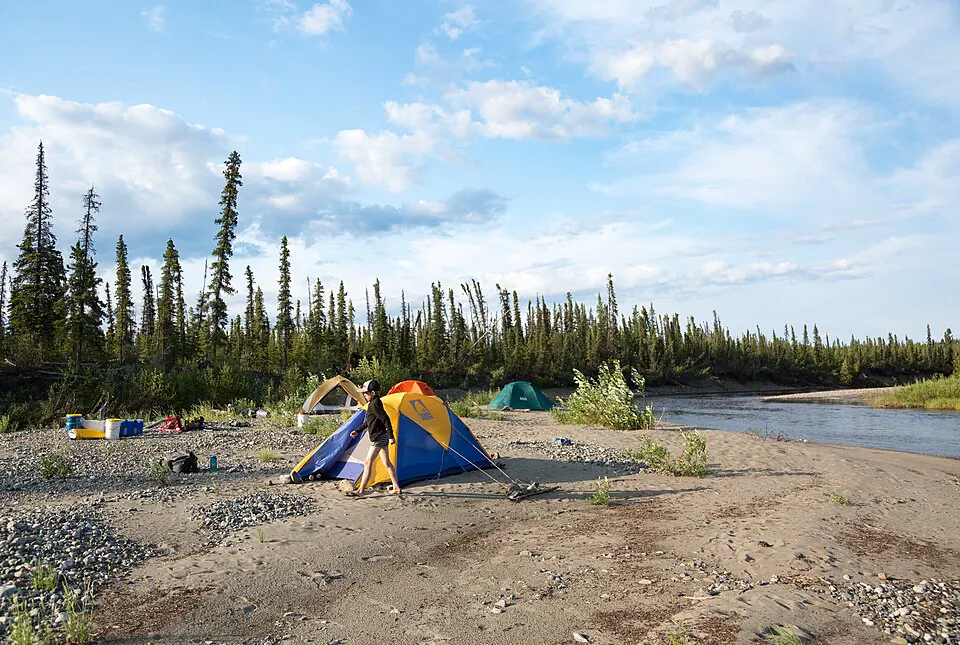
| Soft or wet | Longer stakes driven at a steeper angle away from the tent |
Condensation
Waking up to a damp tent does not always mean it leaked. Your breath adds moisture, and it condenses on the cold fly. Open the vents, leave a door partly unzipped when you can, and keep the fly tight so it does not touch the inner tent.
Taking it down
- Empty and sweep Take everything out and shake or sweep out dirt with the door open.
- Remove the fly and stakes Unclip the fly first, then pull stakes by their loops or with another stake, not by the fabric.
- Fold the poles from the middle Push sections together instead of pulling from the ends, which stretches the shock cord.
- Dry it at home If you pack the tent wet, set it up or hang it to dry within a day or two. A tent stored damp can grow mildew.
Questions people ask
Do I need a footprint?
It is not required, but it protects the floor from wear and adds a layer under you. Keep it slightly smaller than the floor so it does not catch rain.
Which way should the tent door face?
Usually away from the wind, so rain and gusts do not blow in. If the view matters, face it there on calm nights.
How tight should the rainfly be?
Tight enough that it does not flap or touch the inner tent, but not so tight that seams strain. Re-tighten in the evening, as nylon can loosen when it cools and gets damp.
What if I lose a stake?
Pack a few spares. In a pinch, tie the line around a heavy rock or a sturdy fixed object, never a live tree branch you could damage.
Sources
This guide is research-based: it draws on manuals, published specifications and safety guidance, not on hands-on testing. If we link to a retailer, we may earn a commission at no cost to you. Affiliate disclosure