How to Choose a Sleeping Pad for Car Camping
- Format
- Buying guide
- Reading time
- 7 min
- Updated
- November 17, 2026
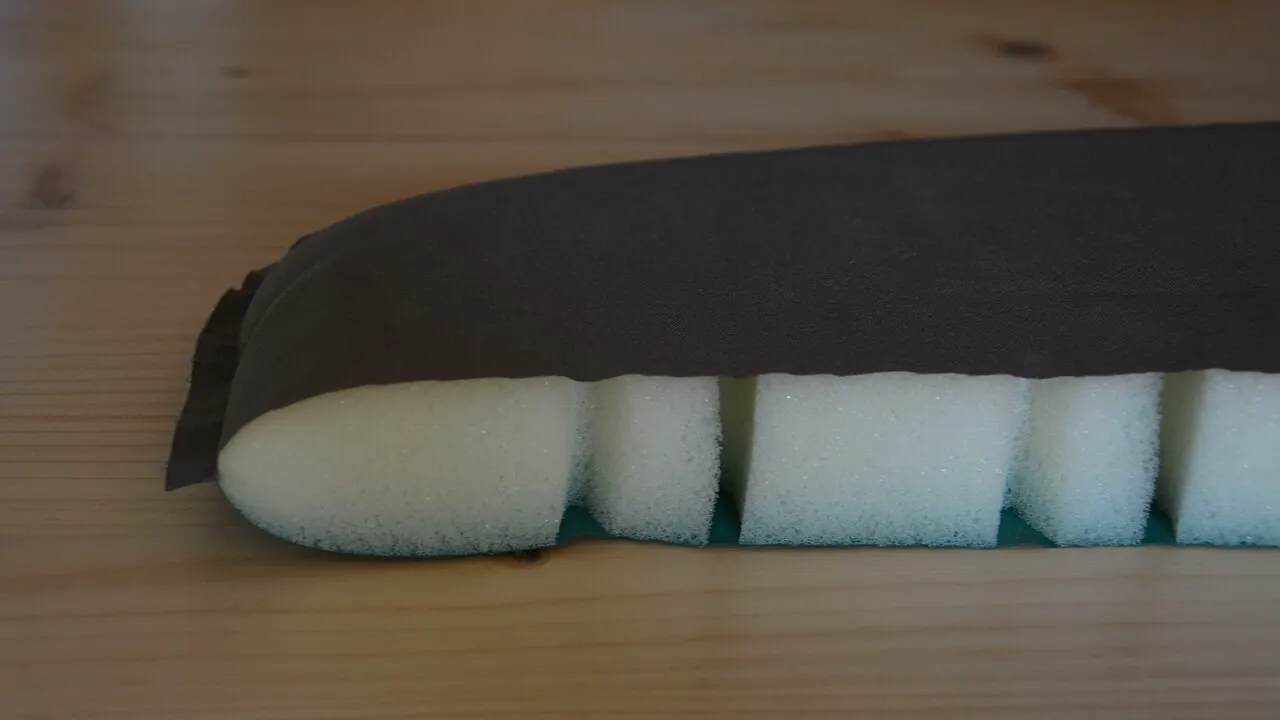
Choose by R-value first, then comfort. For most three-season car camping, a pad with an ASTM F3340 R-value of about 3 to 4 and a thickness you find comfortable is a good starting point. Since weight barely matters beside the car, you can go wider and thicker.
Written for: First-time car campers sleeping in a tent beside the car
A sleeping pad does two jobs. It cushions you, and it stops the cold ground from pulling heat out of your body. People often buy for the first job and forget the second. That is why a thick pad can still give you a cold night.
What R-value means
R-value is a measure of how well a pad resists heat flow. A higher number means more insulation from the ground. Your sleeping bag insulation underneath you gets crushed flat by your body weight, so the pad does most of the work below you.
Before 2020, brands used their own test methods, so R-values were hard to compare. ASTM F3340 is a standard test method for pad R-value that most major pad makers now use. When a product page lists an R-value under ASTM F3340, you can compare it with other pads rated the same way.
R-values add up. If you stack a foam pad with an R-value of 2 under an air pad with an R-value of 3, you get roughly 5. That is a cheap way to extend a summer pad into colder nights.
| Conditions | Typical R-value | Notes |
|---|---|---|
| Warm summer nights | 1 to 2 | Fine above roughly 50°F if you sleep warm |
| Three-season car camping | 2 to 4 | Covers most spring, summer and fall trips |
| Cold nights and shoulder season | 4 to 5.5 | Good if you sleep cold or camp at elevation |
| Winter and snow | 5.5 and up | Often two pads stacked |
Pad types and trade-offs
| Type | Comfort | Packed size | Durability | Best for |
|---|---|---|---|---|
| Closed-cell foam | Firm | Bulky but light | Very high, cannot pop | Backup layer, kids, budget kits |
| Self-inflating | Medium to high | Medium | Good | Side sleepers who want some support |
| Air pad | High | Small | Can puncture | Comfort with small packed size |
| Camp mattress (thick self-inflating or air) | Highest | Large | Good | Car camping where space is not tight |
For car camping, weight barely matters. You can choose a wider, thicker pad than a backpacker would. The real limits are trunk space and how much room the pad takes inside the tent.
Thickness, width and length
- Thickness: side sleepers usually want more, because hips and shoulders press down further.
- Width: a standard pad is about 20 inches wide. Wide pads, about 25 inches, stop your arms falling off the edge.
- Length: pick a pad at least as long as you are tall if you want your feet on it.
- Shape: rectangular pads give more room; tapered pads pack smaller.
Inflation and setup
Air pads need breath, a pump sack or a pump. Breath adds moisture inside the pad, which can lead to mildew over time, so many people use a pump sack. Self-inflating pads open their valve and pull in most of the air on their own, then need a few breaths to firm up.
- Inflate before dark Set up the pad as soon as the tent is up, so you can find leaks in daylight.
- Let it settle Air cools at night and the pad softens. Top it up before you lie down for the night.
- Store it open At home, store self-inflating pads unrolled with the valve open so the foam keeps its spring.
Matching a pad to your trip
Start with the coldest night you expect, then think about how you sleep. A couple car camping in summer at a low-elevation campground can be fine with a moderate R-value and focus on comfort. The same couple in the mountains in fall may wake up cold on the same pad, because the ground stays cold all night.
- You sleep cold, or camp in spring and fall: aim for the upper end of the three-season range, or stack a foam pad underneath.
- You share a tent with a partner: two separate pads let each of you choose your own firmness and warmth. Double pads are wide and warm but move when the other person turns over.
- You camp with kids: closed-cell foam pads are hard to damage and easy to roll out anywhere.
- You might backpack later: a mid-size air pad works for both, but a camp mattress will stay a car-only item.
Air mattresses and cots
Household-style air mattresses are comfortable but often have little insulation. The air inside cools to ground temperature. A cot lifts you off the ground, but cold air moves underneath. In both cases, put a foam pad or a blanket between you and the mattress or cot on cool nights.
Questions people ask
Is a thicker pad always warmer?
No. A thick air pad with little insulation inside can be colder than a thinner pad with a higher R-value. Compare R-value for warmth and thickness for comfort.
Can I add a foam pad under my air pad?
Yes. R-values add up, and the foam also protects the air pad from sharp things on the tent floor.
What if a pad has no ASTM F3340 R-value?
You can still use it, but you cannot compare its R-value reliably with pads rated under the standard. Treat older or unrated numbers as rough estimates.
How do I find a leak?
Inflate the pad and listen, or wipe soapy water over it and look for bubbles. Most pads come with a patch kit.
Sources
This guide is research-based: it draws on manuals, published specifications and safety guidance, not on hands-on testing. If we link to a retailer, we may earn a commission at no cost to you. Affiliate disclosure