Car Camping Kitchen: A Simple Two-Burner Setup
- Format
- How-to
- Reading time
- 7 min
- Updated
- November 17, 2026
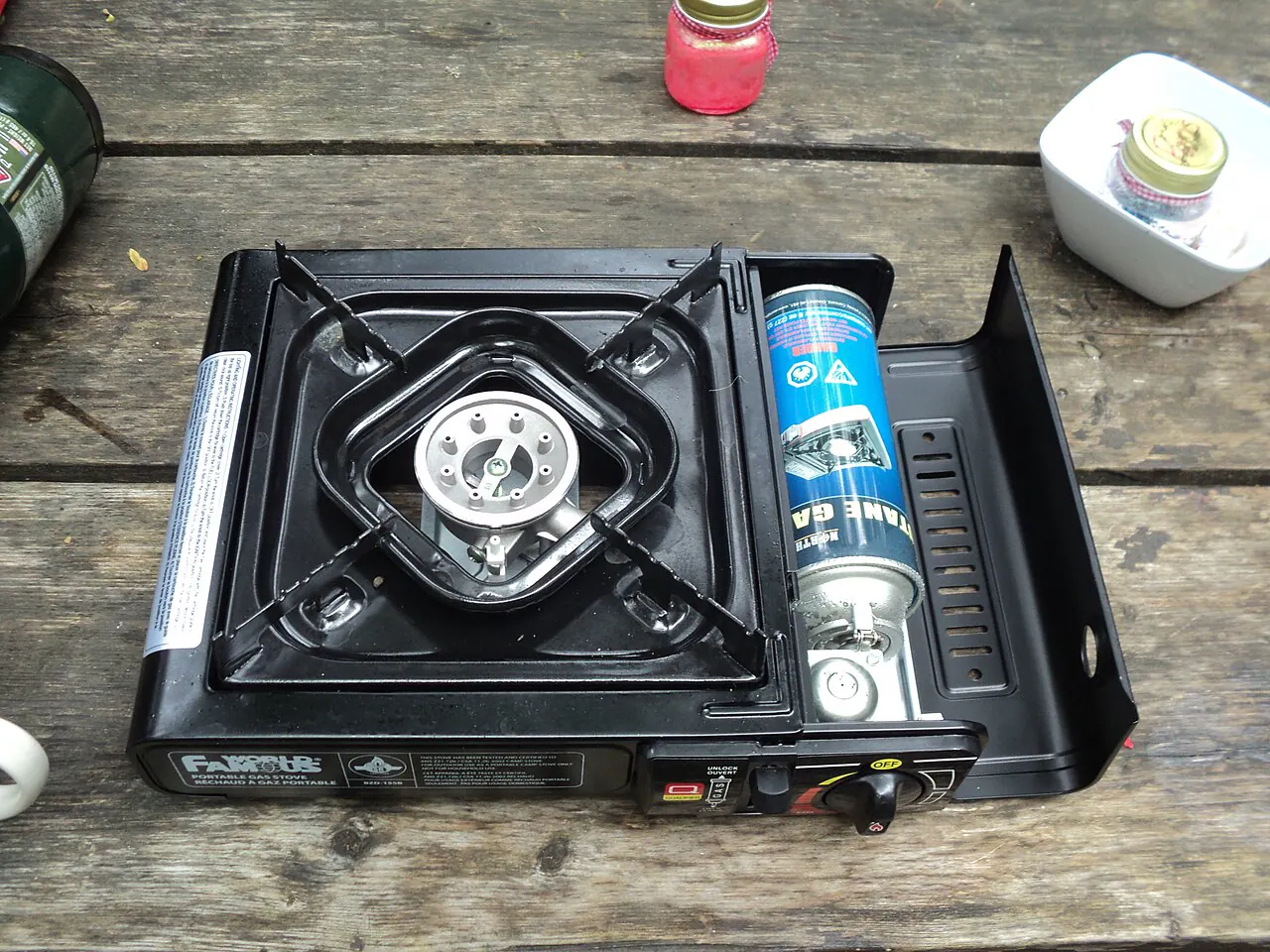
A two-burner propane stove on a stable table, one pot, one pan, a cooler and a wash basin is enough for most car camping meals. Set it up outside, away from the tent, and never run a stove inside a tent or closed vehicle.
Written for: Beginner car campers who want to cook real meals at a drive-in campsite
Why a two-burner stove
A two-burner stove lets you boil water and cook in a pan at the same time. Most models fold into a case with a lid and side panels that block wind. They usually run on small disposable propane cylinders, and many can connect to a larger refillable tank with an adapter hose.
| Stove type | Strengths | Trade-offs |
|---|---|---|
| Two-burner propane stove | Stable, two pans at once, wind panels | Bulky; needs a table |
| Single-burner butane stove | Compact, simple | Butane works poorly in cold weather; one pan at a time |
| Backpacking canister stove | Very small and light | Small pots only; tips easily with big pans |
What to pack
- Two-burner stove and two or more fuel cylinders
- Lighter and waterproof matches, even if the stove has an igniter
- One medium pot with a lid and one frying pan
- Spatula, large spoon, tongs and a sharp knife with a cutting board
- Cooler, ice or ice packs, and a thermometer for the cooler
- Water jug with a spout
- Two wash basins (one to wash, one to rinse), biodegradable soap, sponge
- Trash and recycling bags
- Folding table if the site has no picnic table
Setting up the kitchen
- Pick the spot Use the picnic table or a stable folding table. Place it away from the tent, low branches and dry grass, and downwind of where people sit.
- Level the stove Set the stove on a flat surface and open the wind panels. A wobbly stove spills hot food.
- Connect the fuel With all valves off, screw the cylinder in by hand until it is snug. Do not cross-thread it. If you smell gas, stop and check the connection.
- Light it safely Light the match or igniter first, then open the burner valve slowly. Keep your face and hands clear of the burner.
- Set up wash and prep zones Put the cutting board on one side of the stove and the wash basins on the other, so raw food and clean dishes do not mix.
- Shut down Turn off the burners, let the stove cool, then remove the cylinder. Store fuel outside the tent.
Keeping food cold and safe
Keep cold food at 40°F or below. Pack the cooler with ice, put raw meat in sealed bags at the bottom, and open the lid as little as you can. A second cooler just for drinks stops people opening the food cooler all day.
Simple meal plan for a weekend
- Night one: pasta with jarred sauce and pre-cut vegetables
- Breakfast: eggs and tortillas in the pan, coffee on the second burner
- Lunch: sandwiches from the cooler, no stove needed
- Night two: foil packets or stir-fry with pre-cut meat and rice
Cooking in wind and rain
Wind blows the flame sideways and steals heat from the pot, so food takes longer to cook. Turn the stove so the back panel faces the wind, and park the car or set up a bin as an extra windbreak a safe distance from the flame. Never wrap the fuel cylinder itself; it needs to stay cool.
For rain, set up a canopy or tarp with open sides, high above the stove, so heat and fumes can escape. Keep the stove out from under low fabric. If the weather is too rough to cook safely outside, eat a no-cook meal from the cooler instead of moving the stove indoors.
Cleaning up
Scrape plates into the trash before washing. Wash with a small amount of biodegradable soap, rinse in the second basin, and dispose of gray water where the campground says to. Even biodegradable soap should not go into lakes or streams.
Questions people ask
Can I cook under the tent vestibule in the rain?
No. A vestibule is enclosed enough for carbon monoxide to build up, and the fabric can catch fire. Use a canopy or tarp with open sides, set well above the stove.
How many propane cylinders do I need?
It depends on the stove, the weather and what you cook. Bring at least one more than you think you will use, and check the stove manual for burn time.
Can I refill small propane cylinders?
Most small disposable cylinders are not meant to be refilled. If you camp often, a refillable tank with an adapter hose is an option; follow the stove maker's instructions.
What are signs of carbon monoxide poisoning?
Headache, dizziness, weakness, nausea, confusion and chest pain. If you suspect it, get to fresh air right away and call 911.
Sources
This guide is research-based: it draws on manuals, published specifications and safety guidance, not on hands-on testing. If we link to a retailer, we may earn a commission at no cost to you. Affiliate disclosure