Camp Stove Fuel: Propane vs. Butane vs. Isobutane Canisters
- Format
- Compatibility guide
- Reading time
- 7 min
- Updated
- November 18, 2026
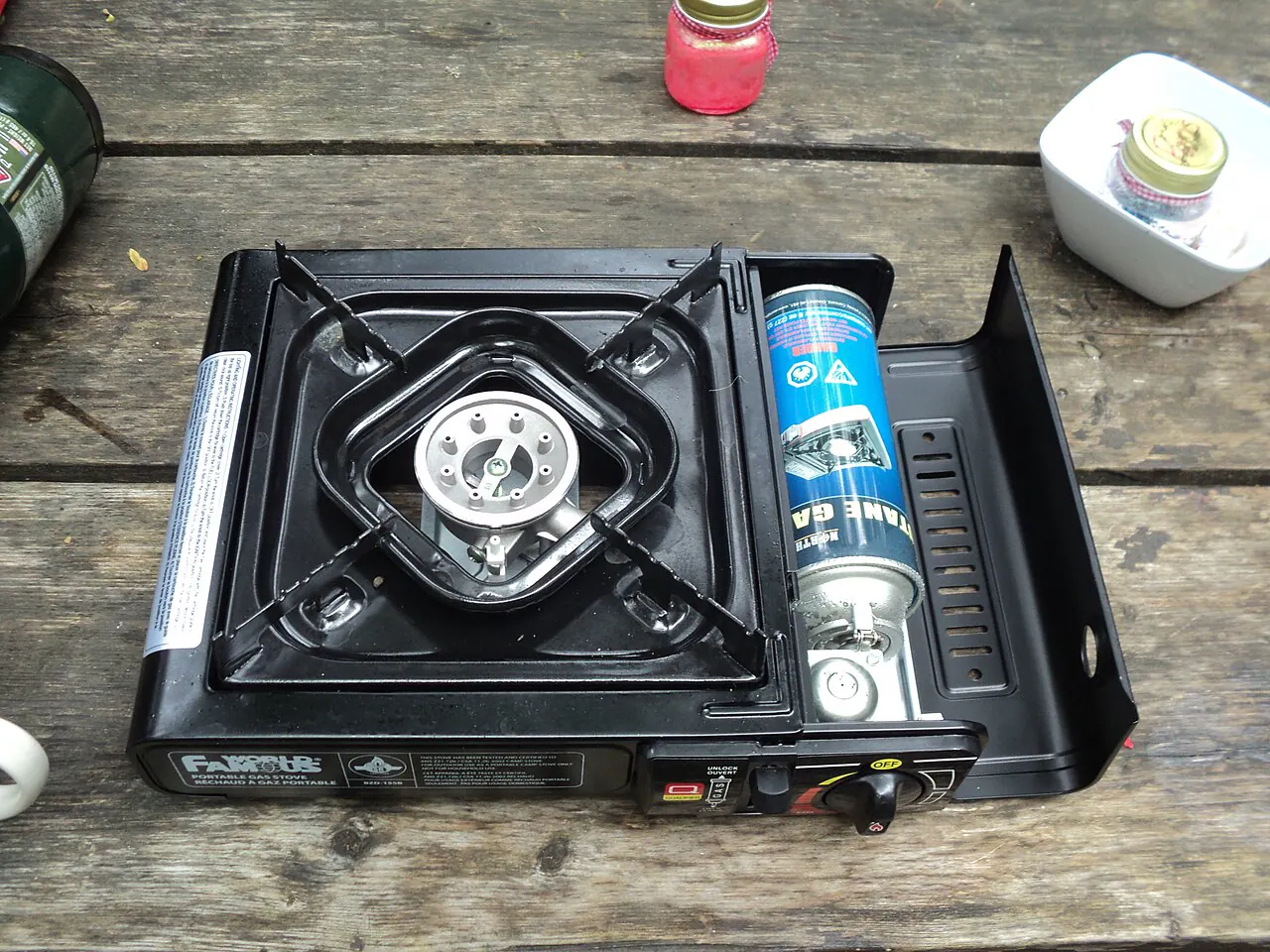
Buy the fuel your stove was built for: the three common containers have different connections and do not swap. Propane cylinders suit two-burner stoves and keep working in the cold, butane cartridges suit tabletop single-burner stoves in mild weather, and threaded isobutane-blend canisters suit small backpacking stoves.
Written for: New campers buying fuel for a first stove, or a first stove to match fuel sold nearby
Three fuels, three containers
All three are liquefied gases sold in sealed metal containers. Inside, the fuel is a liquid under pressure. It has to turn to gas before the stove can burn it, and how easily it does that in cold air is the main practical difference between them. The other difference is the fitting on top of the container.
| Fuel | Usual container | Stoves it fits | Cold weather | Notes |
|---|---|---|---|---|
| Propane | Squat steel cylinder with a threaded top, or a large refillable tank with a hose | Two-burner camp stoves, some grills and lanterns | Keeps vaporizing far below freezing | Heavy container; the usual choice for car camping |
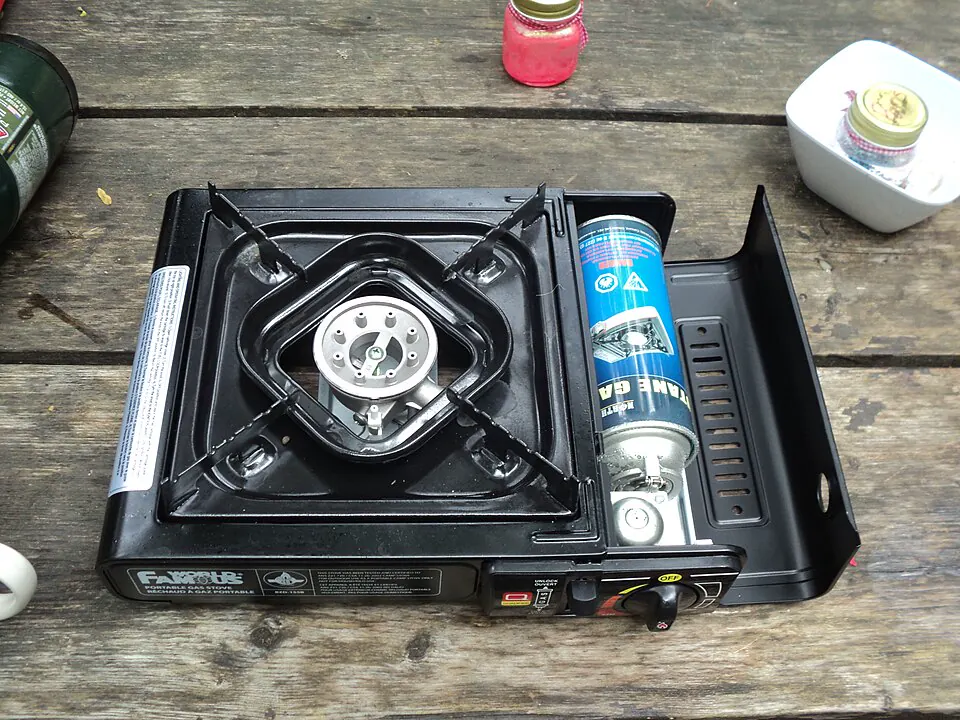
| Butane | Tall, thin cartridge with a notched collar | Tabletop single-burner stoves with a side compartment | Struggles near freezing | Light and compact; a mild-weather fuel |
| Isobutane-propane blend | Short, domed canister with a threaded self-sealing valve | Backpacking canister stoves and integrated stove systems | Better than plain butane; weakens in hard cold | Sold in several sizes with the same thread |
| White gas (liquid fuel) | Refillable fuel bottle you pressurize with a pump | Liquid-fuel stoves only | Works in deep cold | Needs priming and more care; follow the stove manual closely |
Why cold matters
A gas stove needs the fuel to boil off inside the container. Each fuel has a temperature below which that stops. Data in the NIST Chemistry WebBook put the boiling point of butane at about 273 K, which is right around the freezing point of water. Isobutane boils at about 262 K, roughly 12°F. Propane boils at about 231 K, roughly 44 degrees below zero Fahrenheit.
In practice a stove weakens before the air reaches those figures, because the canister cools itself as fuel evaporates. So a butane stove that runs well on a summer evening can sputter on a frosty morning, while a propane stove beside it carries on. Blended canisters add propane to isobutane to stretch the working range, which is why backpacking stoves use them.
Matching fuel to your stove
- Read the stove first The fuel type is printed on the stove, its case or the first page of the manual. That decides what you buy.
- Check the connection Threaded propane cylinders, notched butane cartridges and threaded blend canisters are three different fittings. If it does not seat easily by hand, it is the wrong one.
- Check the forecast low For mornings near freezing, favor propane or a blend canister over plain butane.
- Buy enough, plus one Burn time per container is listed in the stove manual. Wind and cold both raise fuel use.
- Check where you can buy more Find out which fuel the stores near your campground stock before you rely on buying it there.
Adapters exist that join one type of container to a stove built for another. Use one only if the stove maker lists it for your model. A fitting that leaks or delivers the wrong pressure is a fire risk, and it will not be covered by the stove's instructions.
Small cylinders or a refillable tank
Many two-burner propane stoves can run from a large refillable tank through an adapter hose. For frequent campers this cuts waste and the number of containers to carry. The tank must stay outside, upright and on firm ground, and the hose should be the type the stove maker specifies.
Single-use 1 lb cylinders are a different matter. The Park Service states they are intended for one-time use only and can leak propane if refilled, and it notes that transporting refilled DOT-39 containers is illegal. If you want a small refillable cylinder, the Park Service suggests bringing one that is DOT-certified as refillable. It also advises contacting a qualified refiller to find out whether a cylinder can be refilled properly.
Storage, transport and disposal
- Read and follow the instructions printed on the container label for handling and storage.
- Disconnect the fuel from the stove before packing up, with the valves closed.
- Carry containers upright in a bin, away from food, sharp tools and heat. Do not leave them in direct sun.
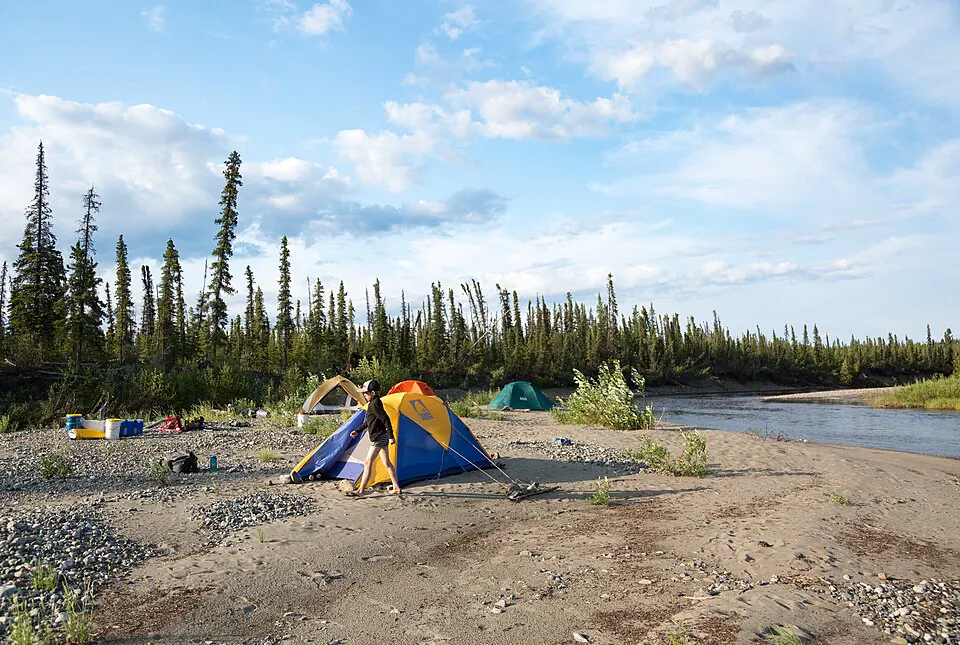
- Store fuel outside the tent at camp.
- Check for leaks at the connection by smell and sound each time you attach a container. If you smell gas, close the valve and reseat it before lighting anything.
- Empty single-use containers still need proper disposal. The Park Service advises asking the visitor center or campground host about recycling bins, or contacting a household hazardous waste program at home.
Questions people ask
Can I use a butane cartridge on a propane stove?
Not directly. The fittings are different and the stove is built for one fuel. Only use an adapter if the stove maker approves it for your model.
Why does my canister stove get weak when it is cold?
The fuel has to evaporate inside the canister, and that slows as the canister cools. Butane stops boiling at around the freezing point of water. Blend canisters and propane keep working at lower temperatures.
Can I refill the small single-use propane cylinders?
No. Single-use DOT-39 cylinders are not designed to be refilled, and federal agencies warn against it. Use a cylinder sold as refillable instead and have a qualified refiller fill it.
How do I know how much fuel is left?
Weigh the container on a kitchen scale and compare it with the net fuel weight printed on it. Shaking gives only a rough idea. Bring a spare so it does not matter.
Sources
This guide is research-based: it draws on manuals, published specifications and safety guidance, not on hands-on testing.As an Amazon Associate we earn from qualifying purchases. Links to Amazon are paid links; they cost you nothing extra. Affiliate disclosure