Camp Storage: Bins, Duffels and Bear-Resistant Containers
- Format
- Buying guide
- Reading time
- 7 min
- Updated
- November 18, 2026
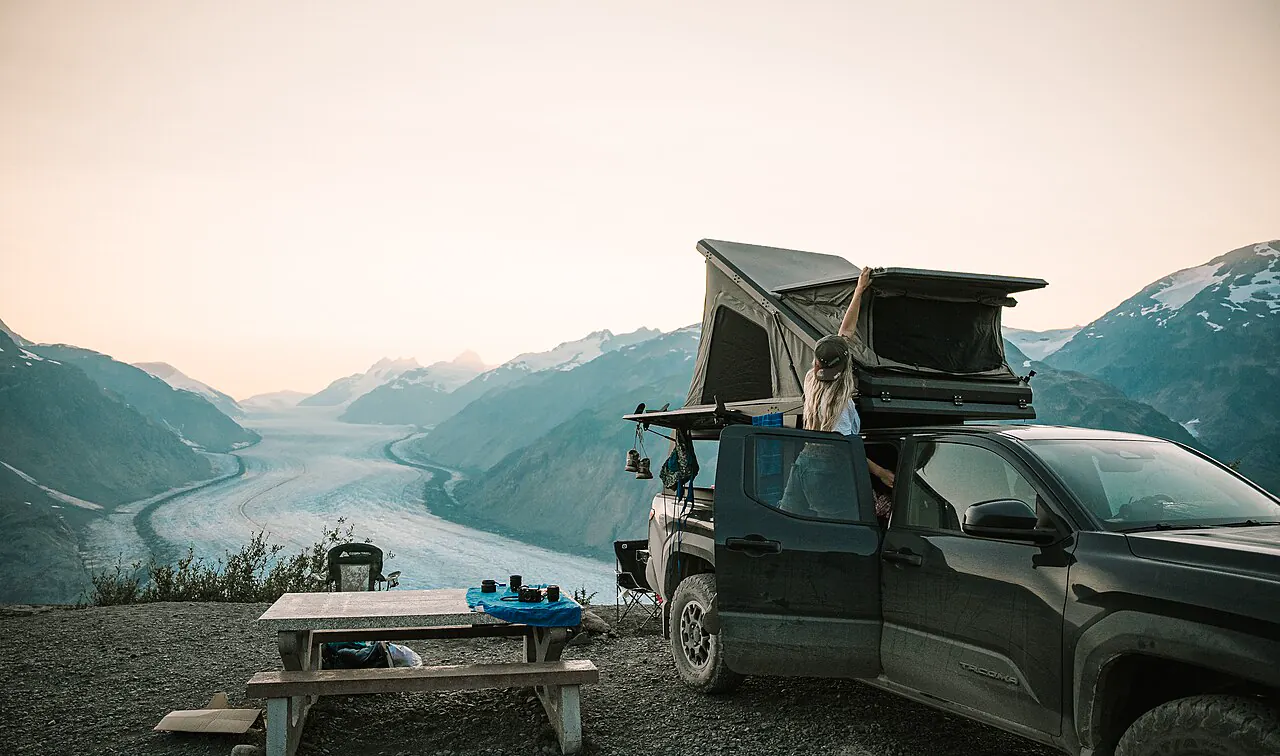
Use latching bins for the kitchen and small hard items, duffels for bedding and clothes, and whatever food storage your campground requires. An ordinary bin or cooler does not stop wildlife. Where bears live, check the park rules first and look for a certified bear-resistant container if one is required.
Written for: Car campers organizing gear and food for a drive-in campground
Storage is the least exciting camping purchase and one of the most useful. A simple system means you can find the lighter in the dark, set up in order, and put food away fast when the campground requires it. It also keeps animals out of your dinner, which protects them as much as you.
Bins or duffels
| Container | Good for | Limits |
|---|---|---|
| Latching plastic bin | Kitchen kit, lanterns, fuel, tools, dry food | Rigid, so it needs a matching space in the trunk; not wildlife-proof |
| Clear bin | Small items you want to see at a glance | Thin plastic can crack if it is dropped or overloaded |
| Soft duffel | Sleeping bags, clothes, pillows, towels | No crush protection; fabric soaks through unless it is water-resistant |
| Dry bag or water-resistant duffel | Spare clothes and bedding on wet trips | Hard to see inside; items get buried |
| Cooler | Perishable food and drinks | Heavy when full; counts as food storage under park rules |
| Certified bear-resistant container | Food and scented items where rules require one | Heavier than an ordinary container; only works when latched or locked |
Hard items go in bins and soft items go in duffels. A bin protects a lantern or a stove from being crushed, stacks neatly and doubles as a small table. A duffel squeezes into the gaps that bins leave in a trunk. A common setup for car camping is two or three bins plus one duffel per person.
A bin system that works
- Sort by activity, not by item type One bin for cooking and washing up, one for camp tools and lights, one for dry food. You carry a whole task to the table in one trip.
- Measure the trunk first Note the floor width and the height under the cover. Pick bins that fit two across or stack two high in that space.
- Choose lids that latch A lid that only presses on can pop off in the car and lets rain and insects in at camp.
- Label two sides Write the contents on the end and the long side so you can read it however the bin is stacked.
- Keep fuel apart Store fuel cylinders upright in the tools bin, away from food and away from anything that makes heat.
- Leave them packed at home Restock the kitchen bin after each trip and store it ready. Packing for the next trip becomes loading the car.
What counts as food to wildlife
More than you would think. The National Park Service says bears treat anything with a scent as food. Its list includes canned goods, bottles, drinks, soaps, cosmetics, toiletries, trash, ice chests, sunscreen, bug repellent, fuel and items used for preparing or eating meals. All of it has to be stored properly, not only the groceries.
That changes how you pack. Toothpaste, sunscreen and the dish sponge belong with the food at night, not in the tent. A simple way to manage this is one bin or bag for every scented non-food item, so it moves to storage in one go.
Rules differ from park to park
There is no single rule. According to the Park Service, some parks require food lockers or bear-resistant food containers, while others allow food to be hung from a tree. In some parks food may stay in a car if it is out of sight with the windows fully closed, and only in daylight hours. In others, all food must come out of the car and go into a locker. The Park Service also says never to store food in a pickup truck bed or strapped to the outside of a vehicle, and never in your tent or backpack.
What "bear-resistant" means
The Interagency Grizzly Bear Committee (IGBC) runs a certification program and publishes a list of products that passed either a trial with captive grizzly bears or a technical evaluation. Makers are asked to put the IGBC logo and a certification number on the product, and the committee says the best check is to match that number to its list. Many public land managers use the list when they decide which containers are approved on their land.
- Certified does not mean bear-proof. The IGBC states that certification does not guarantee a product will never be breached.
- It only works closed. In the committee's own example, an unlocked cooler is not bear-resistant. Read the listing for what has to be latched or locked for the certification to apply.
- Approval is local. A container accepted in one park may not be on the approved list in another, so confirm with the land manager.
- A campground food locker, where provided, is usually the simplest option. Look for its inside size on the campground page so you know your cooler and bins fit.
Before you buy storage
0 of 7 packedQuestions people ask
Is a hard plastic storage bin bear-proof?
No. An ordinary bin keeps out rain, dust and small animals at best. Where a bear-resistant container is required, use a certified one or the campground locker.
Can I keep food in my car overnight?
It depends on the park. Some allow food in a closed car only during daylight and out of sight, and others require all food to be moved to lockers. Check the rules for your campground.
Do toiletries really need to be stored with food?
Yes, where food storage rules apply. The Park Service lists soaps, cosmetics, toiletries, sunscreen and bug repellent among the scented items bears treat as food.
What size bins should I get?
Size them to your trunk, not to a gear list. Two or three medium bins that fit side by side are easier to carry and stack than one large bin you can barely lift.
Sources
This guide is research-based: it draws on manuals, published specifications and safety guidance, not on hands-on testing.As an Amazon Associate we earn from qualifying purchases. Links to Amazon are paid links; they cost you nothing extra. Affiliate disclosure